Bathrooms are the harshest environment in any building. Temperatures swing 15°C in twenty minutes. Humidity routinely hits 90% during a hot shower. Steam, condensation, and occasional water splashes all conspire against whatever material sits overhead.
Yet ceiling selection for bathrooms is often treated as an afterthought — a line item decided by what's left in the budget rather than what the space actually demands. The result? Warped panels, mold spots, and premature replacements that eat into project margins and damage reputations.
This guide breaks down what actually matters when specifying bathroom ceilings, based on field experience across residential, hospitality, and commercial projects.
Why Bathroom Ceilings Fail (And How to Prevent It)
Before comparing materials, it helps to understand the three forces working against a bathroom ceiling:
1. Continuous Moisture Exposure
A typical family bathroom generates 0.5–1.0 liters of water vapor per shower. Without adequate ventilation, that moisture saturates the ceiling surface and penetrates porous materials. Over weeks and months, this causes swelling, sagging, and delamination.
2. Mold and Mildew Growth
Mold doesn't need standing water — it thrives at relative humidity above 60%. Bathroom ceilings that trap moisture create ideal conditions for Aspergillus and Penicillium colonies, which appear as black or green spots and can pose health risks.
3. Temperature Cycling
Hot showers followed by cool-down periods cause materials to expand and contract. Rigid materials with poor dimensional stability develop cracks at joints and fastening points.
Key Takeaway: The right bathroom ceiling material must address all three challenges simultaneously — not just water resistance on paper, but real-world performance under repeated humidity cycling.
Comparing Bathroom Ceiling Materials: What Actually Works
PVC Gypsum Ceiling Tiles All-Rounder
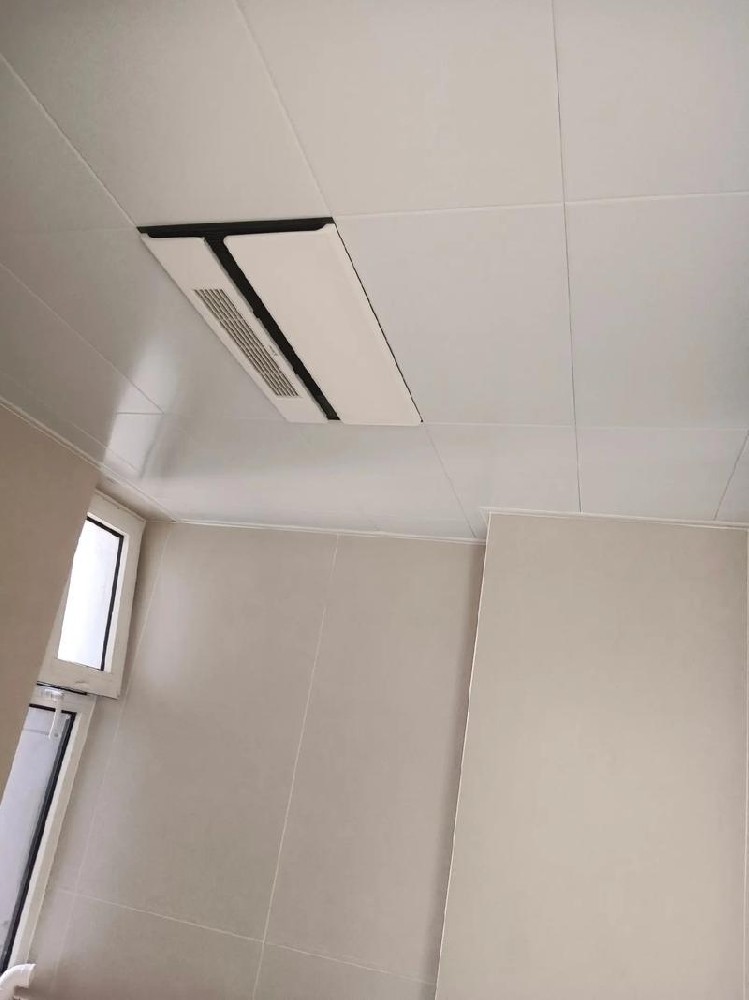
PVC-faced gypsum ceiling tiles have become the default specification for bathroom projects, and for good reason. The PVC film acts as a moisture barrier on the visible face, while the gypsum core provides rigidity and fire resistance.
Why contractors choose PVC gypsum for bathrooms:
Moisture barrier: The PVC lamination prevents water vapor from penetrating the gypsum core, addressing the #1 failure mode
Mold resistance: PVC surface does not support fungal growth — wipe-clean surface simplifies maintenance
Dimensional stability: Unlike bare gypsum board, PVC-faced tiles resist warping under humidity cycling
Fire performance: Gypsum core naturally retards fire (typically Class A per ASTM E84)
Cost efficiency: Mid-range pricing with excellent lifecycle value — typically 8–12 years service life in bathroom conditions
Aesthetic options: Available in white, wood grain, and custom patterns to match interior design schemes
Specification tip: Look for PVC gypsum tiles with a minimum thickness of 7mm. Thinner tiles (5–6mm) may flex and create visible sagging between grid spans in humid conditions. Sanda Industry's PVC Gypsum Ceiling line offers thickness options from 7mm to 9mm, with RH resistance rated up to 95%.
Mineral Fiber Ceiling Tiles Use with Caution
Mineral fiber tiles are excellent for offices and commercial spaces, but bathrooms require careful specification. Standard mineral fiber absorbs moisture — that's how it achieves its acoustic performance (NRC ratings).
When mineral fiber works in bathrooms:
Only in well-ventilated commercial restrooms with mechanical exhaust
Only with moisture-resistant formulations (look for RH ratings ≥90%)
Only when backed by a proper vapor barrier
When to avoid:
Residential bathrooms with natural ventilation only
Shower enclosures or steam rooms
Any space where the ceiling may experience direct water contact
If mineral fiber is specified for a commercial bathroom project, choose high-density formulations with factory-applied moisture-resistant coatings. Sanda Industry's Acoustic Mineral Fiber Ceiling series includes models with RH ratings up to 99%, suitable for semi-humid commercial environments.
Fiberglass Acoustic Ceilings High-Performance
Fiberglass ceiling tiles offer the best moisture performance of any acoustic ceiling material. The glass fiber core is inherently hydrophobic — it does not absorb water, will not warp, and resists mold growth naturally.
Advantages for bathroom applications:
Zero moisture absorption (water contact causes no damage)
Excellent acoustic performance (NRC 0.85–1.05)
Lightweight — reduces load on grid systems
Long service life (15+ years even in humid environments)
Trade-offs:
Higher unit cost than PVC gypsum or mineral fiber
Surface can be more fragile during handling and installation
Typically requires a T-grid suspension system
For hospitality projects where both acoustics and moisture resistance matter, fiberglass is often the premium specification. Sanda Industry's Fiberglass Acoustic Ceiling series pairs T15/T24 grid systems with fiberglass panels for hotel bathroom corridors and spa facilities.
What About Aluminum and Other Metal Ceilings?
Aluminum ceiling panels are another option for wet areas — they're completely waterproof, lightweight, and available in perforated acoustic versions. However, they're typically 2–3× the cost of PVC gypsum and can show water spots and fingerprints more readily. Aluminum makes sense in high-end commercial projects (luxury hotels, wellness centers) but is usually over-specified for standard residential or mid-range commercial bathrooms.
Five Specification Criteria That Most Contractors Overlook
Beyond the material itself, these five factors determine whether a bathroom ceiling installation succeeds or fails:
Ventilation Capacity
No ceiling material compensates for poor ventilation. Ensure the bathroom has an exhaust fan rated for the room volume (typically 1 CFM per square foot, minimum 50 CFM). The best ceiling material in the world will still fail in an unventilated bathroom.
Grid System Selection
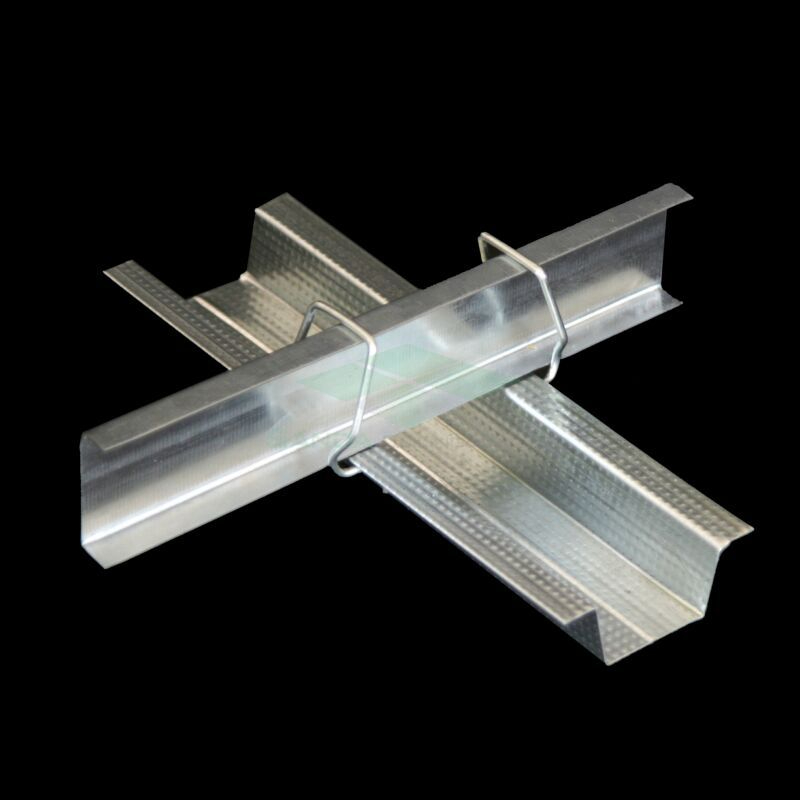
For suspended ceilings, choose a grid system with corrosion-resistant coating. Standard white-painted grids may rust at cut edges exposed to humidity. Look for hot-dip galvanized or pre-painted systems rated for humid environments.
Tile Edge Type
In bathrooms, reveal edge (also called tegular edge) tiles are preferable to flat lay-in tiles. The recessed edge creates a shadow line that helps disguise any minor dimensional changes from humidity cycling, keeping the ceiling looking clean over time.
Cleaning and Maintenance Access
Specify a layout that allows individual tile removal for accessing plumbing and ventilation above the ceiling. A 2×2 foot (600×600mm) grid pattern provides better access than 2×4 foot (600×1200mm) panels.
Color and Light Reflectance
Light-colored ceilings with high light reflectance (LR ≥0.80) make small bathrooms feel larger and reduce lighting requirements. White remains the safest and most versatile choice — dark ceilings in bathrooms tend to show condensation marks more prominently.
Common Mistakes to Avoid
Having seen numerous bathroom ceiling installations across different markets, these are the mistakes that recur most frequently:
Mistake 1: Using standard drywall or plasterboard without moisture protection.
Bare gypsum board in a bathroom will absorb humidity, sag within 12–18 months, and develop mold. Always use moisture-resistant formulations or PVC-faced alternatives.
Mistake 2: Specifying acoustic tiles with low RH ratings.
A mineral fiber tile with RH 70% rating is fine for an office but will fail in a bathroom. Always check the manufacturer's RH specification — look for ≥90% for bathroom applications.
Mistake 3: Ignoring the grid system.
Even moisture-proof tiles will look terrible on a rusting grid. Specify corrosion-resistant grid components for all bathroom installations.
Mistake 4: Installing ceiling tiles before waterproofing is complete.
Ceiling installation should be one of the final trades. If tiles go in before wet-area waterproofing is tested, they may absorb moisture from construction-phase humidity.
Mistake 5: No access panels.
Bathroom ceilings conceal plumbing, exhaust fans, and electrical junctions. Without access panels, the first leak means destroying the ceiling. Plan access from the start.
Quick Reference — Material Selection Matrix
| Criteria | PVC Gypsum | Mineral Fiber (RH-rated) | Fiberglass | Aluminum |
|---|---|---|---|---|
| Moisture Resistance | ★★★★☆ | ★★★☆☆ | ★★★★★ | ★★★★★ |
| Mold Resistance | ★★★★☆ | ★★★☆☆ | ★★★★★ | ★★★★★ |
| Acoustic (NRC) | ★★☆☆☆ | ★★★★☆ | ★★★★★ | ★★★☆☆ |
| Fire Rating | ★★★★☆ | ★★★★☆ | ★★★★☆ | ★★★★★ |
| Cost Efficiency | ★★★★★ | ★★★★☆ | ★★★☆☆ | ★★☆☆☆ |
| Best For | Residential & mid-range commercial | Commercial restrooms (ventilated) | Hotels, spas, premium projects | Luxury commercial |
Conclusion — Specify for the Environment, Not the Catalog
Bathroom ceiling selection comes down to one principle: match the material to the moisture exposure. A material that performs beautifully in a dry office can fail catastrophically in a humid bathroom.
For most projects — residential or mid-range commercial — PVC gypsum ceiling tiles deliver the best balance of moisture resistance, cost efficiency, and aesthetic versatility. For premium hospitality projects where acoustics matter, fiberglass acoustic ceilings justify their higher cost with superior long-term performance.
Whatever material you choose, remember that no ceiling outperforms its installation. Proper ventilation, corrosion-resistant grids, and thoughtful access planning are just as important as the tile specification itself.
About the Author: Sanda Industry Co., Ltd. is a China-based manufacturer specializing in acoustic ceiling tiles, PVC gypsum ceilings, and ceiling grid systems. With CE and ISO9001 certifications and 120+ product models, Sanda serves contractors and distributors across global markets. For product specifications, samples, or project consultations, contact our team or browse our full product catalog.